

Parked in the Sun for 2 Hours? How It Affects Your Car AC
You step into your car after it’s been sitting outside for a couple of hours in the sun. The steering wheel feels too hot to touch. The seats are burning. And even after turning the AC to full blast, the air still feels warm for several minutes. Don’t be surprised, as it’s a common problem that most car owners face during the hotter months.
But most drivers assume that this is a normal summer discomfort. What they don’t realize is that extreme heat can put serious stress on their vehicle’s air conditioning system, especially when there are already small issues developing inside it.
So what exactly happens to your car’s AC when your vehicle sits in the sun for hours, and why ignoring it could lead to an expensive repair bill you weren’t expecting? In this blog, we’ll break down how heat affects your car’s AC system, the signs of trouble to watch for, and when it may be time for professional AC repair.
What Happens to Your Car’s AC System After Sitting in the Heat?
When your car sits in the sun for hours, it undergoes a process called heat soaking. The metal, plastic, and glass components absorb thermal energy and hold onto it, making these surfaces extremely hot.
Your car’s AC system works by circulating refrigerant through a closed system to remove heat from the cabin and push cool air back inside. But when the car cabin temperature becomes excessively high, the AC system has to work much harder to cool the vehicle down. Here is exactly what goes on inside –
1. Your AC Compressor Works Overtime
The compressor is one of the main components, and its job is to circulate refrigerant and help produce cold air. When your car’s interior becomes extremely hot, it has to work harder to bring the cabin temperature back to a comfortable level.
Over time, this additional stress can lead to increased wear and tear, overheating, reduced cooling efficiency, and compressor failure over time. And unfortunately, compressor repairs are often one of the most expensive AC repairs drivers face.
2. Refrigerant Pressure Increases
Extreme temperatures also affect refrigerant pressure inside the AC system. When pressure becomes too high, cooling performance drops. That’s why you might notice your AC blows hot air sometimes for the first 10-15 minutes after a long sunny park as the system needs time to stabilize before the compressor kicks in. This also leads to the development of leaks as old seals and hoses can crack due to high pressure.
This is one reason many drivers suddenly realize they might need a quick car AC recharge during the hottest months of the year. In many cases, the system is already low on refrigerant, and the extreme heat simply exposes the problem faster.
3. Expanding Seals and O-Rings
The AC system relies on rubber O-rings, hoses, and seals to keep the refrigerant trapped. Extreme heat causes these rubber parts to expand and contract. Once these parts weaken, refrigerant leaks are much more likely to occur.
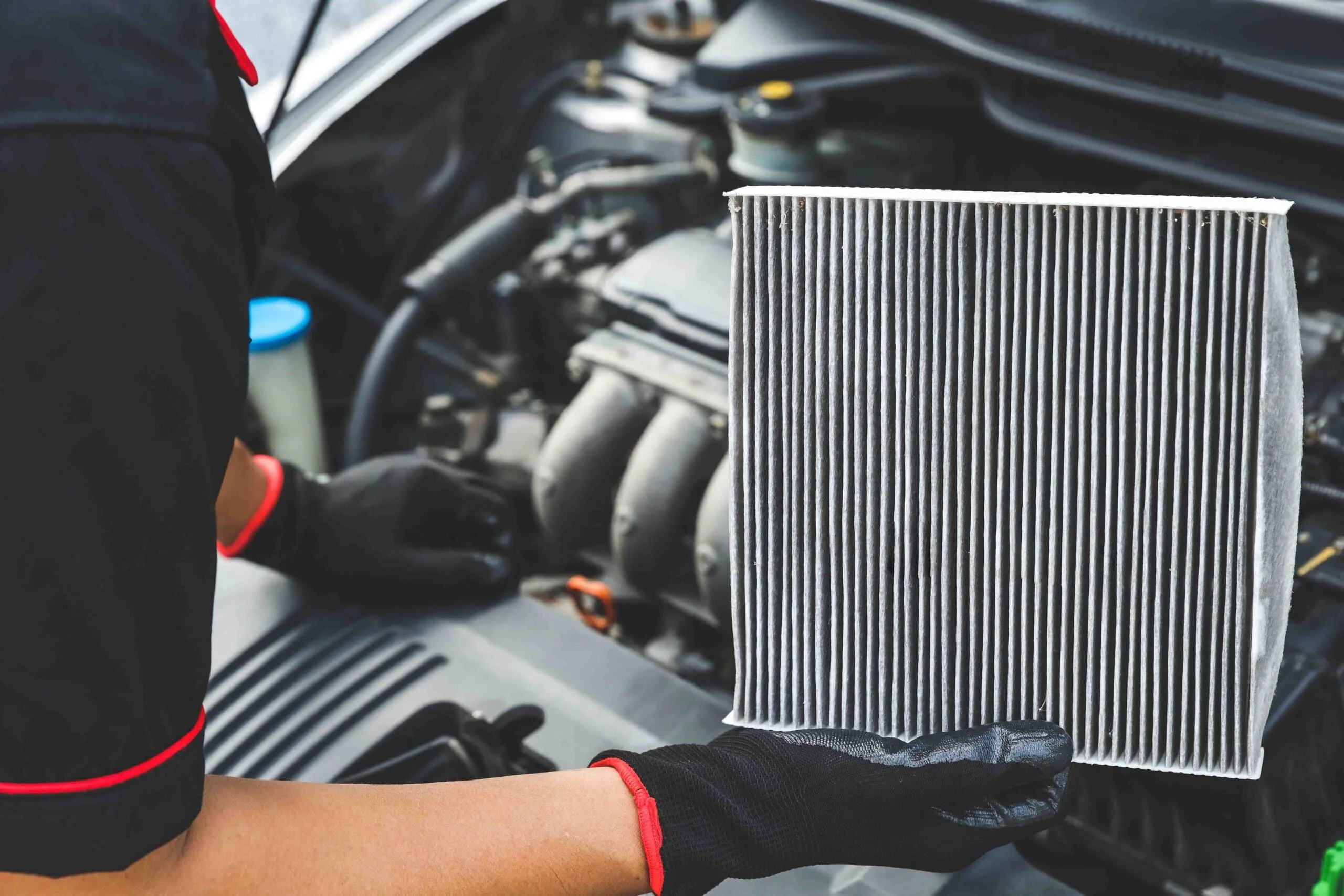
4. Cabin Air Filter Gets Overloaded
When temperatures rise, the AC system is also used more frequently and at higher fan speeds. That means the cabin air filter is now collecting more dust, debris, pollen, and contaminants.
When the filter is not cleaned for a long time, it can restrict airflow and make it feel like your AC isn’t working properly, even if the system itself is still functional.
| Long-Term AC Solutions for Your Car, Contact Us Now |
Signs Your AC Is Already Struggling After Heat Exposure
| Warning Sign | What It Could Mean |
| The AC blows warm air | Low refrigerant or compressor issue |
| Weak airflow | Clogged filter or blower problem |
| Strange clicking noises | Compressor or fan issue |
| Musty smell from vents | Mold or moisture buildup |
| AC works only while driving | Cooling fan or pressure problem |
| Longer cooling times | Refrigerant loss or compressor wear |
If you’re experiencing any of these issues, it’s smart to schedule an emergency AC repair before the problem becomes more expensive.
The Two AC Components That Suffer the Most in Extreme Heat
1. The Compressor
The compressor is the heart of your AC. It circulates refrigerant through the entire system. And it’s the part that suffers most from heat-related stress.
But most people don’t know that the compressor is lubricated by oil that’s carried within the refrigerant itself. When refrigerant leaks out, even a little, oil levels drop too. Run a compressor on low refrigerant long enough, and it seizes up. By that point, you’re not looking at a recharge. You’re looking at a full replacement.
This is why technicians always say that low refrigerant is never just low refrigerant. If the refrigerant is low, there’s usually a leak somewhere that needs to be found and repaired.
2. The Condenser
Another part that struggles heavily in summer heat is the condenser. Located behind your vehicle’s front grille, the condenser acts a lot like a radiator for your AC system. Its job is to release heat from the refrigerant so the cooling cycle can continue without any hindrances.
But when your car is parked in direct sunlight, there’s very little airflow moving across the condenser, which makes it harder for the system to release heat efficiently. Also, if it’s already clogged with road debris, leaves, or dust particles, which is common in Citrus Heights during fall, you’ll notice the AC struggling more in stop-and-go traffic or during that initial startup.
The good news is that a dirty condenser is often fixable if caught early. But if heat stress continues for too long, it can eventually place extra strain on the compressor. Replacing a compressor is far more expensive than a simple car AC recharge.
Recharge vs. Repair vs. Replacement – What Does Your Car Actually Need?
Most car drivers often get confused while choosing the right service because every time your car’s AC acts up, it doesn’t mean you need a full replacement.
| Service | Best For | Typical Situation |
| Car AC Recharge in Citrus Heights | Low refrigerant | AC still cools slightly |
| Car AC Repair in Citrus Heights | Leaks or damaged parts | Uneven or weak cooling |
| Car AC Replacements in Citrus Heights | Major system failure | Compressor failure or severe leaks |
Professional car AC technicians first check the refrigerant pressure, leak locations, compressor operation, electrical connections, and cooling performance before recommending the right repair or recharge solution.
| Find the Right AC Solution for Your Car – Call Us Today |
What Does a Professional AC Inspection Actually Cover?
Not all AC inspections are the same. Some shops simply add refrigerant, hand over the bill, and send you on your way without finding the real issue. But if there’s an underlying leak or compressor problem, the cold air usually won’t last very long.
When you take your vehicle to a reputable shop for AC repair or recharge, the technician should perform a detailed system check before recommending repairs or a recharge.
- Pressure testing to check both high and low sides to identify leaks and system stress.
- Refrigerant recovery to remove and measure remaining refrigerant (tells the tech a lot about leak severity).
- Vacuum pull evacuates moisture and verifies the system holds pressure.
- UV dye leak detection may also be performed if a leak is suspected, helping technicians identify the exact location of the leak.
- Component inspection of compressor clutch, condenser, evaporator, expansion valve, belts, and hoses.
- A Proper AC Recharge that involves checking the correct refrigerant type (R-134a or R-1234yf) and refilling it to the exact factory-recommended level your vehicle requires.
- Vent temperature verification that confirms the system is actually cooling at the proper temperature before you leave.
That’s the difference between a proper repair and a temporary band-aid fix.
What Does a Car AC Service Actually Cost in 2026?
One of the biggest questions drivers ask after their AC stops cooling is: “How expensive is this going to be?”
The answer depends on what’s actually wrong with the system. A simple refrigerant recharge costs far less than replacing a damaged compressor or condenser. Here’s what car AC services cost in 2026 based on current market pricing –
| Service | Estimated Price Range |
| AC recharge (R-134a systems) | $100–$250 |
| AC recharge (R-1234yf newer vehicles) | $250–$500 |
| Leak detection + recharge | $150–$350 |
| Compressor replacement | $500–$1,500 |
| Condenser replacement | $300–$1,000 |
| Expansion valve replacement | $100–$400 |
| DIY recharge kit | $40–$130 |
Why Newer Vehicles Cost More to Recharge
If your vehicle was manufactured after around 2015, there’s a good chance it uses R-1234yf refrigerant instead of the older R-134a.
R-1234yf is designed to be more environmentally friendly, but it’s also much more expensive than older refrigerants. That’s one major reason newer vehicles cost more for a car AC recharge.
So if a technician quotes a higher recharge price for a newer car, it’s generally due to the refrigerant itself, not necessarily because the shop is overcharging.
Why DIY AC Recharge Kits Don’t Always Solve the Problem
A lot of drivers try store-bought recharge kits first, and sometimes they seem to work temporarily.
But if the system has a refrigerant leak, moisture contamination, compressor damage, or incorrect pressure levels, then adding refrigerant alone may actually create more problems with your car’s AC System. Overcharging the system can even damage components and reduce cooling performance.
| Book AC Diagnostics Today – Call Now |
Quick Tips to Protect Your AC During Citrus Heights Summers
You can’t always avoid parking in the sun. But you can reduce the damage by following a few simple tricks.
- Use a windshield sunshade. It keeps interior temps 20-30°F cooler, reducing heat stress on the entire system.
- Crack the windows slightly. It allows some heat to escape, reducing the pressure differential when you start the AC.
- Don’t blast the AC immediately. Roll down windows first, let hot air escape, then turn on the AC, starting on low.
- Park in shade whenever possible.
- Run the AC for at least 10 minutes weekly, even in cooler months. It keeps seals lubricated and prevents them from drying out.
- Get an AC check before summer. Because during the peak summer season, everyone needs AC service, and shops are backed up. Spring is the smart time for car AC Inspection in Citrus Heights.
Read More About
- Why Car A/C Comfort Matters When Driving with Children
- How Poor Car AC Conditions Can Raise Your Accident Risk
- Uneven Car AC Temperatures?
- Don’t Ignore That Burnt Smell After Driving
Customer Queries
How much should an AC recharge cost for a car?
In the Citrus Heights area, a professional AC recharge normally costs between $150 and $300. However, this price may vary depending on the type of refrigerant your car uses. Newer vehicles manufactured after 2015 often use R-1234yf, which is more environmentally friendly, but at the same time, it’s more expensive to recharge than the older R-134a.
How much should it cost to refill and change the AC refrigerant on a car?
The refrigerant itself (R-134a) costs $10-$15 per 12 oz. can at parts stores, while R-1234yf runs around $45 per 8 oz. can. A full professional service, including recovery, evacuation, leak test, and recharge with the correct amount per factory specifications, ranges $100–$350 for R-134a systems and $250–$500+ for R-1234yf systems. The labor and diagnostic work are where most of the cost comes from, and it’s worth it to avoid repeat recharges.
Can I recharge my car’s AC at AutoZone?
AutoZone sells DIY recharge kits for $40-$130, but they don’t perform AC services themselves. Those kits only work for simple, low-refrigerant situations, and they give only an approximate charge. In the absence of proper service, you won’t find leaks, and it won’t be a factory-specification fill.
In California, if your system has a leak, topping it off without fixing the leak isn’t legally compliant. If your AC is consistently underperforming, a professional diagnosis is the best option.
Takeaway
Parking in the sun for a couple of hours doesn’t seem like a big deal, but repeated heat exposure puts serious strain on your car’s AC system. And if your vehicle already has a small issue developing, high summer temperatures can quickly turn it into a major repair.
But the good thing is that your car gives you early warning signs, as we mentioned above. Weak airflow, warm air, strange noises, or longer cooling times are all signals that something may not be working properly.
That’s why it’s important not to ignore these symptoms. Visiting a trusted car AC service provider early can help identify the issue before it leads to expensive damage.
Is Your Car AC Struggling in the Heat? Visit California Transmissions of Orangevale
If you’re looking for a professional and experienced team that can diagnose the real issue behind your car’s AC not cooling properly, you’re just a call away.
California Transmissions of Orangevale is based in Orangevale and provides professional AC recharge, AC replacement, and emergency AC repair across Citrus Heights, Fair Oaks, Carmichael, Folsom, and the greater Sacramento area. Our technicians diagnose the root cause, so you’re not back in our shop again in two months.
We also offer a 12-month/12,000-mile warranty on all mechanical parts and labor we provide during the service. And all electric parts we provide come with a 90-day warranty. Our AC recharge in Citrus Heights is available for R134a only.
With over 30 years of experience in car’s AC and transmission services and 4.9 rating in Google, we’re locals’ first choice in Citrus Heights, and all other areas we serve.
Our shop is open Monday through Friday from 8:00 AM to 5:00 PM, making it easy to schedule an inspection at a time that works for you. Call us at 916-988-8922 to schedule an inspection today!
