

How Much Does Transmission Repair or Rebuild Cost in California?
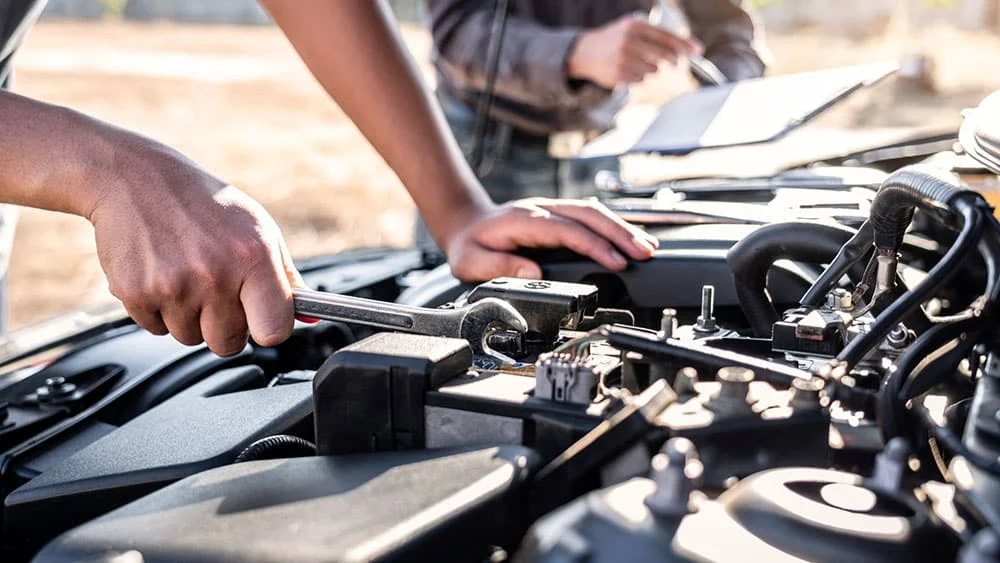
It is crucial to ensure that the transmission is in good working condition – so that you’re not stranded in the middle of the road, calling for help. Though transmissions can last longer with regular maintenance, there are certain unfortunate occasions when you might be struggling with it. This can happen for numerous reasons, such as overheating transmissions, fluid leaks, electrical failures, mechanical failures, engine issues, etc.
All these need to be addressed promptly. Though most transmission repair costs in California range somewhere around $300 to $12,000, which can vary depending on whether it’s time to rebuild/replace the transmission or to perform some minor repairs.
Many car owners are not aware of how much it may cost them to get the transmission repaired. Bottom line is, get it properly diagnosed first at a reputable transmission shop, so you’re given a clear picture of what’s going on by experts who specialize in this complex component of your vehicle.
There are times when a transmission replacement is called for by shops, but a simple repair can get you back on the road for a much cheaper price. Bear in mind, your vehicle may offer you a lot more life expectancy than you may know. People often want to move on from the vehicle because they must dump some money into it. More often than not, it is cheaper to repair the vehicle than it is to replace it, and sometimes a replacement used vehicle has underlying issues its previous owner didn’t want to address either.
So, worry not! This blog will help you learn how much you can expect to spend on a transmission repair in California.
Typical Transmission Cost Ranges in California
These are rough ranges from this guide. Your exact price depends on your vehicle, the transmission, and the damage.
- Minor repairs (leaks, sensors): around $300 to $5,000
- Automatic transmission rebuild: $3,500 to $12,000 (see the full table below)
- Manual transmission clutch replacement: $500 to $4,500
- Full transmission replacement: $2,000 to $12,000+ depending on the type and whether it is new, remanufactured, or used
Not sure which applies to you? Read our guide on transmission repair or rebuild or contact us for an estimate.
| Get Expert Transmission Repair Today. Call (916) 988-8922 |
How Much Does Transmission Repair Costs?
As said earlier, repair transmission costs in California vary depending on the complexity of the repair, type of vehicle, severity of the issue, etc. Minor repairs, such as fixing small leaks or replacing sensors, usually fall on the lower end and may cost around $300 to $5000 (price is estimated only, but will vary depending on the vehicle make/model, issue, and what parts need to be addressed).
A high-mileage transmission loaded with metal with a litany of codes and driving malfunctions might not be a candidate for a minor repair, so be prepared for the big Kahuna.
What Are The Signs Of Failing Transmission?
If your transmission is not working properly, your car will let you know. However, here we have a few symptoms that mean it’s time to get your transmission checked out ASAP – see also 5 signs your transmission needs immediate repair and how to spot transmission problems early.
1. Delayed or Rough Shifting – If your car is hesitating before shifting or shifts with a jolt, has delayed engagements into reverse and forward, something is off with the transmission. Read more about a car shifting roughly or slipping.
Or is it? Powertrain control modules (main engine computers) play a role in this, too. A good example is Toyota PCM’s from the early 2000s to 2015. Bad PCM often can be misinterpreted as a transmission failure when it’s more of an electrical issue. If you’re experiencing delayed or rough shifting, it could mean internal damage, low fluid level, electrical issues, or mechanical failures, but it isn’t always limited to the transmission.
You could be experiencing engine malfunctions, too. A simple road test and data stream scan will help determine the transmission health and whether the issue is electrical or mechanical in nature, or maybe it’s an engine performance issue.
2, Slipping Gears – Slipping gears is a big red flag. When your transmission transitions from 1 gear to the next, and suddenly you see the RPMs start revving high, this is a typical slip. A good example of this is the GM 4L60E found commonly in 1500 trucks, Suburbans, Hummers, Camaro, Corvette, and many other GM products. This transmission, for example, when you lose 3rd gear, it’ll rev the engine high around 3500 – 4500 RPM approximately at 25 mph.
This is a good example of failure and a slip. Binding sensations, which are common in Honda/Toyota transmissions, suggest two sets of clutches engaging or working at the same time. You’ll feel the vehicle kind of pull back like it’s being restricted from momentum.
This is another example of a slip and could be mechanical in nature or a valve body failure. These are all conditions that likely would result in a rebuild, but sometimes could be minor, like a bad valve body. A proper diagnostic will help determine a suitable repair path.
3. Leaking Fluid – Transmission fluid is critical for pressure to apply clutches and torque converter lockup, and it serves as a lubricant and detergent. If you notice a small puddle of oil (reddish or brownish) leaking fluid, this needs immediate attention before it leads to overheating and damage to the transmission. Not sure what is leaking? See how to tell a car fluid leak from a transmission leak, or find out why your car is losing fluid.
Common leak points are cooler lines at the transmission to radiator/cooler, pan gasket leak, front pump seal leak, rear output shaft seal leak, axle seal leak on front wheel drive transmissions, and side cover leak.
There is a litany of leak points, all of which vary on the transmission. Hondas don’t typically have pans; case half leaks aren’t uncommon, or bell housing pump seal leaks. Sometimes repairs can be minor and quick; others may necessitate a rebuild.
4. High RPMs or Strange Revving Sounds – A sudden spike in the RPMs without an increase in the speed is a cause of transmission issues, but not limited to. If the engine is revving too high when shifting, it means the transmission isn’t engaging properly, but it isn’t always limited to such circumstances.
This suggests the transmission could be slipping. On older transmissions, such as a GM 700R4, TH400, a Throttle valve cable out of adjustment can cause this, along with no kickdown for forced downshifts. It doesn’t always mean the transmission has failed.
Again, this circles back to the vehicle and transmission. A proper diagnostic will help determine whether it’s a minor repair or a major overhaul. But it’s not always a transmission issue either; a failing fan clutch can drive the illusion of a revving situation, too.
5. Sluggish Acceleration – If your car seems unresponsive when you press the gas or does not respond right away, chances are your engine may not be transferring power properly. The transmission isn’t always the culprit. You could have engine misfires, a plugged Catalytic Converter, a bad Mass air flow sensor, a failing throttle position sensor, etc. These are examples of engine performance issues that can often be mistaken for a transmission failure. Sometimes it could be both the transmission and engine.

Factors Affecting The Cost Of Transmission Repair
Several factors may affect the cost of a vehicle’s transmission. Here, we have mentioned some of the factors so that you have an idea of how much the repair would cost –
1. The Make and Model Of The Vehicle – The cost of the transmission repair depends on the make and model of the car. Luxury and imported cars, such as BMW or Mercedes, tend to have pricier repairs because of their high-end and rare parts. For this, you can expect to pay $3,000 +. On the other hand, domestic brands such as Ford or Chevrolet have lower repair costs.
This may cost around $500 +. It all comes down to what the issue is. For example, a Ford 6R80 suffers from electrical issues. A common repair is to replace the Lead Frame. This doesn’t require the transmission to be removed, but it does require the valve body to be removed to replace this component.
A job like that would run about $1600, and the transmission would get serviced as part of the job because fluid would be drained out to perform the repairs. A Chevy Truck/Suburban/Tahoe with 6L80/6L90 equivalent has a TECHM (transmission control module) which is internal to the transmission. It too carries a similar (a little more expensive but not much) cost but requires programming on top of it, which adds to your expenses.
2. Need for Full Transmission Replacement – Replacement is required when there is no scope for repair. Very common on vehicles equipped with a CVT. A complete transmission replacement cost varies depending on the type and model, with brand-new and/or Remanufactured transmissions ranging from $4,000 to $12,000.
If you don’t want to invest in an OE replacement, you can opt for a rebuild or replacement with a remanufactured transmission from a 3rd party source, as long as it’s a non-CVT transmission. This could be a cheaper alternative, but it is not always the case either.
A Subaru TR580 CVT transmission can run around $10k + to replace, vs a good used may be half that price, while a Nissan Jatco for a Nissan Sentra might be in the ballpark of about $7500 – $9000, depending on year, and the part number of the transmission.
The average cost for a dealer OE exchange for a Chevy 6L80 and Ford 6R80 is about $9k ish in price if you replace vs rebuild. Rebuilding often carries a lesser price for equal quality and yields similar life expectancies, but dealer exchange units may offer a better warranty term for the part. Sometimes rebuilding vs replacing can be more beneficial, too. A good example of this is the Dodge 65-68RFE transmission 6-speed series.
The remanufactured dealer units do not come with the upgrades that resolve some of their bigger failures. Rebuilding often builds those upgrades into the cost and is often less expensive than replacing them.
A good example is the valve body warping issue with them. We would flat sand the valve body and replace its channel plate with a high-end billet plate that corrects the warping issue. This is also part of the correction for the P0871 code, which states that the warping factor plays a role in the failure, which causes the transmission’s overdrive section to overheat and burn the clutches. This correction repairs that problem, which is mostly done on a rebuild.
OEM replacements do not build those upgrades from the factory; this is mostly an aftermarket upgrade discovered by many astute builders in the industry.
3. The Type of Transmission – The cost also depends on the type of transmission. An automatic transmission repair is more costly than a manual because of its more complex components, and manuals don’t have almost any electronics on them, a couple of speed sensors, and a backup solenoid. Continuously Variable Transmission (CVT) and dual-clutch systems are even pricier.
A simple manual transmission “fix” may only set you back $300 to $2,500 for things like clutch replacement, and/or hydraulics, vs a rebuild, which can climb into the $2500 – $4000 range on its own before a clutch and hydraulics are even factored, while CVTs can range between $2,500 – $12,000. Most CVT repairs will be leak repairs, simple sensors, and the valve body.
That is about the extent of repairs that can be performed on a CVT. If you have a Nissan CVT (Jatco – which is also used in Mitsubishi and Chevy Spark, for example), those cannot be repaired. If it’s bad, it will need to be replaced, and we do not recommend replacing it with a used option, as they do not have a good shelf life and commonly fail at low miles.
A dealer exchange is the best option for longevity, but it carries a large price tag. CVTs cannot be rebuilt as parts are sparse and typically only manufacturers rebuild them, and yield the best longevity. Almost all Front Wheel Drive transmissions require wheel alignment.
4. Age Of The Car – Older cars have more worn-out transmission components, which makes the repair more frequent and costly as parts get harder to find due to parts being obsolete.
On the flip side, the cost of fixing a modern vehicle with a high-tech transmission may run anywhere between $3,000 and $12,000 – especially if programming or electronic module replacement is required.
A good example is a Chrysler Transmission, such as a Jeep/RAM 850RE or ZF8HP50 transmission. This is a highly electronically controlled transmission that requires programming with valve body replacements. A repair could set you back a good $5000 vs a rebuild, which typically ranges in the ballpark of about $8000 or more, plus tax, plus programming.
| Looking for Reliable Transmission Repair? Call (916) 988-8922 |
Issues Affecting Transmission Repair Cost
Not all transmission problems are the same. Fixing small issues, such as fluid leaks or solenoid failures, may cost $150 to $4000. The higher prices are for the transmissions that require a full-valve body replacement plus programming, or they’re more modern with high-cost factors to be considered.
A good example of this is a Dodge Truck Diesel 68RFE. This transmission has valve body warping issues. However, grinding noises, slipping gears, torque converter chatters, metal in the pan, etc., may cost you more and likely will result in a rebuild or replacement being called for.
This really depends on the vehicle and transmission installed, and prices can vary. If metal is found in the transmission, it almost always results in a rebuild. The more damage there is, the higher the labor and part costs.
Ignoring early warning signs can lead to a complete transmission failure – leading to more expensive repairs in the future. Torque converter chatters, slipping gears, and vibrations are early symptoms of a failure; ignoring check engine light codes is a bad idea. Learn more about torque converter failure causes.
Transmission Rebuild
Rebuilding is a middle-ground option between repair and full replacement. During a transmission rebuild, a builder will take apart the internals of the transmission, perform a comprehensive inspection of all the parts and electronics, replace the worn-out parts, and reassemble them. Not sure whether to repair or rebuild? Use our transmission repair or rebuild guide.
The varying degrees of pricing depend on the transmission and the vehicle. Vehicles have varying degrees of labor to remove and reinstall the transmission. Parts have gotten expensive across the board, which is also factored into rebuilt costs. All rebuilds will always get a rebuilt torque converter. This is a standard practice in the industry at large.
However, if you have a high-performance vehicle or a complex transmission system, you can expect to spend around $6,000 or more. The newer the vehicle, the more it costs. A 2023 GMC Denali 10-speed is going to be more expensive than a 2015 equivalent 6-speed.
While a rebuild can be expensive, it is the best way to reduce the replacement costs, which can be higher to replace than to rebuild. A dealer remanufactured exchange transmission is always going to be more expensive than rebuilding your existing transmission.
Very rarely is it ever cheaper to replace. The transmission would have to be pretty destroyed internally for it to come to a point where a replacement is called for.
Automatic Vs. Manual Transmission Repair Cost (not rebuild)
An automatic transmission may cost around $300 to $5,000. Meanwhile, a manual transmission may cost around $300 to $2,500. The price depends on the complexity of the repair. This is a very rough estimation of what you should expect and vague, given the vast price differences between transmissions and the vehicles they’re installed in.
It is highly recommended you call and inquire about this, as you’ll get a lot more accurate pricing information once you advise of the vehicle year, make, and model.
I mentioned above about a Dodge 68RFE. The price for that transmission carries a varying degree of cost and is determined based on a lot of different factors.
A stock overhaul is a consistent price, but let’s factor in for a second that maybe you have a performance chip on your Diesel engine. This would necessitate a torque converter upgrade, which will add a good $3000 price increase to the rebuild or exchange.
The reason for something like this is that the torque converter acts as a buffer from the engine to the transmission. The more torque and horsepower you introduce, the more the torque converter has to buffer it.
Chipping a diesel engine to boost torque and performance, but it will require you to beef up the torque converter to a Quad lock with a billet flex plate. Failure to do this will shorten the life of the torque converter, which will eventually damage the transmission and will void your warranty if it should fail within the warranty period.
Here’s a table that showcases the cost of automatic and manual transmission – costs will vary based on vehicle, transmission, and circumstances involved.
| Type Of Repair | Automatic Transmission Repair Cost | Manual Transmission Repair Cost |
| Fluid Change | $300 – $1,500 | $50 – $400 |
| Leak Repair | $200 – $1,500 | $100 – $600 |
| Clutch Replacement | NA | $500 – $4,500 |
| Minor Internal Repair | $300 – $5,000 + | $300 – $2,500 + |
| Major Internal Repair (Rebuild) | $3,500 – $12,000 | $2500 – $5,000 |
| Transmission Replacement | $2,000 – $12,000+ | $1,500 – $6,000 |
Note: The prices mentioned above are just an overview and approximation. For more accurate information, get in touch with California Transmission.
A Transmission service at $1500 + tax would fit the description of a Ford Transit 250. You must partially R&R the transmission just to service it, and wheel alignment is necessary when done, despite the fact that it’s a rear-wheel-drive transmission. The Subframe must come down to access the pan along with exhaust R&R.
Transmission replacement also factors in the option to replace with a good used one. Prices listed in the main body also do not factor in a used option, whereas this table represents a broader range of options from a rebuild, replacement, remanufactured, and good used.
Read More About
- 5 Signs Your Transmission Needs Immediate Repair
- How to Spot Transmission Problems Before They Get Worse
- Transmission Rebuild vs. Replacement
- Transmission Repair or Rebuild: Which Is Right for You?
Frequently Asked Questions About Transmission Repair Costs
➢ Is it cheaper to repair or replace a transmission?
In most cases, a repair or a rebuild costs less than a replacement. Replacement is usually only called for when the transmission is badly damaged internally. See transmission rebuild vs. replacement for details.
➢ How often should I service my transmission?
We typically recommend servicing your transmission every 40,000 miles, and every 20,000 miles for a CVT such as the Nissan Jatco. Learn more about transmission service vs. flush and the signs it’s time for a fluid change.
➢ Why is a diagnosis important before repair?
Symptoms like rough shifting or sluggish acceleration can come from the engine or electrical system, not just the transmission. A road test and scan show what is really wrong before you pay for repairs.
➢ Can a CVT be rebuilt?
As noted above, CVTs are usually not rebuilt by independent shops because parts are limited, and some models, like the Nissan Jatco, cannot be repaired and must be replaced.
Takeaway
The transmission is an important part of your car’s operation, which can be costly to repair. With advancements in technology, there has been an evolution in the make and type of transmission, which has led to an increase in the repair costs.
Hence, it is important to understand the factors that affect the cost of the repair. It gives a clear idea of what you can expect to spend when you visit a repair shop. But the best way to ensure that the transmission doesn’t require frequent repair is to maintain it!
Servicing your transmission is important, just like performing an engine oil change. Your transmission requires maintenance too, just not at the regular frequency your engine does. We typically recommend your transmission be serviced every 40k miles. This contrasts with what most manufacturers recommend, but we have found that this service interval increases the transmission’s longevity.
A CVT – especially a Nissan Jatco- we recommend it be serviced more frequently at every 20k mile interval. We have found through experience that more frequently serviced Nissan Transmissions yield a much longer life expectancy.
The costs of rebuilding transmissions vs repairing them have gotten expensive as the manufacturers introduce higher speed transmissions, frequent back orders of parts to repair them, and the ever-increasing costs of newer vehicles, parts for them, and the amount of electronics introduced. Newer vehicles carry a lot more electrical issues, all of which affect the operation of your transmission and the cost to perform repairs. Older transmissions are getting more expensive as parts are getting obsolete. With harder-to-find parts, the cost to replace broken components has gone up due to them becoming rarer and less available.
Transmissions from the ’60s – ’90s are starting to get harder to rebuild and repair. Common transmissions like the TH350, TH400, C4, C6, 727/904, you can get a lot of parts for those still, albeit more expensive, but available.
Transmissions from the 90s – 2007 parts are available, but some are starting to wither out of existence, and parts are starting to get harder to get, especially for those from the early 90s. More common on Mitsubishi, Suzuki, Earlier Toyotas/Hondas, and Nissans.
Transmissions from 2005 to the current have largely had no issues with parts. The newer it gets, the more electronics it has, which drives the prices up significantly. Some of the newer transmissions, like some of the Hondas from 2020 and newer, are too new to get parts for.
There are some instances where rebuilding isn’t an option, as some of the newer transmissions haven’t been out long enough for the market to start stocking parts for them. This is a case-by-case scenario. We may only have an option to buy a dealer unit if this is the case, and sometimes those are on national back order.
Looking For An Affordable Transmission Repair Service? Get In Touch With California Transmission!
Transmission failure can be nerve-wracking. We understand this, and hence, we offer a range of solutions to ensure that your car is properly taken care of. The transmission in modern cars is becoming more complex, which is just not a job for any handyman.
Our certified mechanics and technicians diagnose and repair just about any automotive problem – no matter how minor or major the problem is. See why drivers choose our trusted local transmission shop in Orangevale.
Schedule an appointment with California Transmission to get quotes for transmission repair costs in California. Call 916-988-8922 or book online. We also serve drivers in Folsom, Fair Oaks, Citrus Heights, Rancho Cordova, and Granite Bay.
